Pollen, sap, salt film and bird droppings sit on the glass and quietly take a cut of everything your system makes. We take it off — safely, thoroughly, and with photos to prove it.
Every homeowner has heard it: “the rain takes care of them.” Rain rinses loose dust. It does nothing about the bonded layer that actually costs you money.
Worse, rain creates a problem. As water sheets off a panel it carries grime down to the bottom edge and leaves it there. That band of baked-on dirt sits directly over the lowest row of cells — and because cells in a panel are wired in series, shading the bottom row drags down the whole panel, sometimes the whole string.
NREL research puts typical annual soiling losses around 5%, ranging from roughly 2% to 25% depending on conditions. On a Connecticut roof with spring pollen and tree cover, you are not at the friendly end of that range.
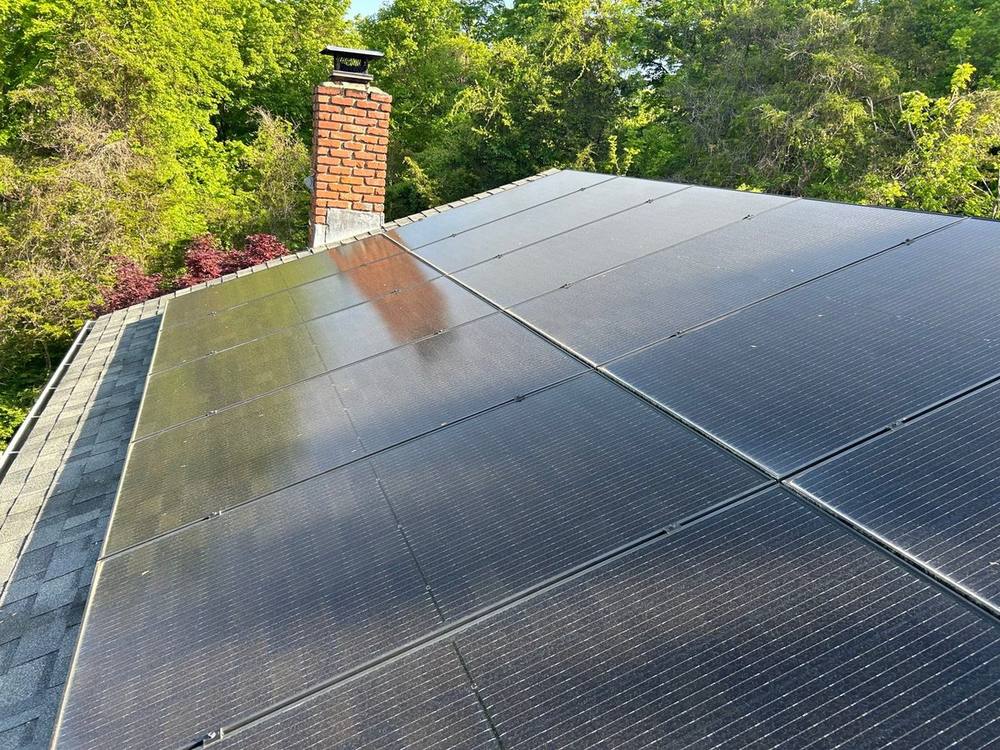
Panel manufacturers are specific about how their glass should be cleaned. We follow it — a two-tech crew, a documented photo trail, and a cheap pressure-wash job is the one thing you’ll never get from us.
We walk the array before touching it — cracked glass, lifted flashing, chewed wiring, nesting under the panels. You hear about it before we start, not after.
A full rinse at hose pressure carries off grit and loose debris first, so nothing hard is on the glass when the brush touches it.
Panel-safe cleaner and soft microfiber brushes lift pollen, sap and droppings; then a dedicated rinse-only brush takes every trace of it back off.
Before-and-after shots of each array plus a short note on anything we saw up there, texted or emailed the same day.
No estimate visit, no “starting at.” Count your panels, multiply by fifteen — that’s your price, firm before we roll a truck.
Not sure of your count? Check your install paperwork or monitoring app — or just call and we’ll figure it out together. Commercial arrays are always quoted separately.
A purpose-made, panel-safe cleaning solution applied with soft brushes with microfiber heads, at normal garden-hose pressure. We pre-rinse to carry off any grit that could scratch, scrub with the cleaner, then do a full rinse-down with a separate brush that only ever touches rinse water. No pressure washing, ever — that’s what actually damages panels and voids warranties.
Not usually. Most residential arrays we reach from the ground with water-fed poles, which is safer for our crew and easier on your roof. When an array genuinely needs to be accessed from above, we use proper fall protection and we never step on the panels themselves.
A typical residential array is done in one to three hours depending on panel count, pitch and access. We do need an outdoor water hookup and your OK to use it — the office confirms both when we book, so the visit itself needs nothing from you but a hello.
Twice a year minimum is our recommendation for New England weather — spring for pollen, fall before the low-sun months. Properties under heavy tree cover or near the shoreline benefit the most from keeping that schedule.
You should see it in your monitoring app within a day or two of the visit, weather being equal. How big the jump is depends on how dirty the array was — a lightly soiled roof recovers a little, a pollen-caked one recovers a lot.
Yes — warehouses, municipal buildings, schools, carports and ground mounts. Commercial jobs are quoted per site and we can work around your operating hours.
Send us your town and panel count and we’ll price your cleaning. Ask about annual and semi-annual plans while you’re at it.